Keynote Speakers
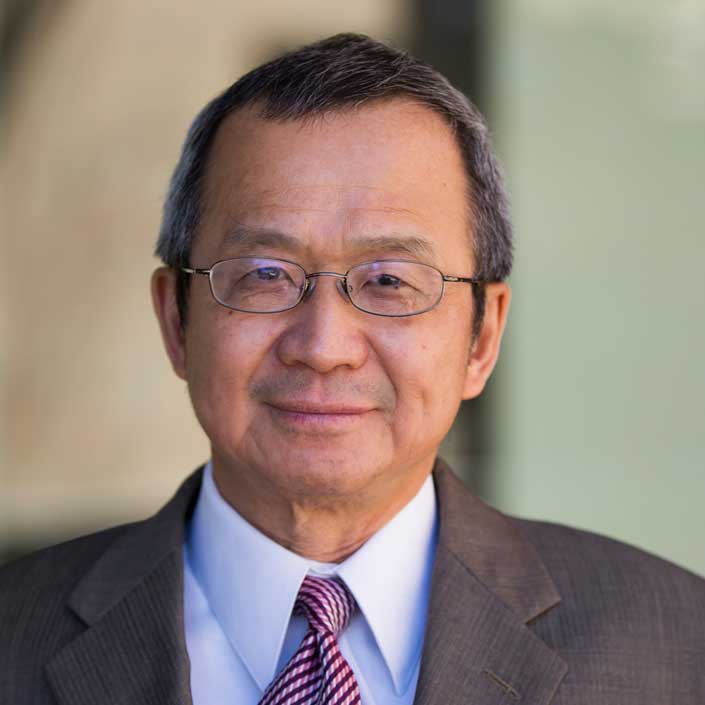
Prof.
Leung Tsang
University of Michigan, Ann Arbor, MI, USA
Paper Title
Multiple Scattering of Waves with Applications in Microwave Remote Sensing, Metasurfaces and Photonic Crystals
Abstract
Multiple scattering of waves is a complex phenomenon that exists in physical system. The Multiple scattering theory (MST) was initially studied by Foldy, Lax, Korringa and Ishimaru. Past theoretical work was based on analytic methods such as vector radiative transfer theory, Feynman diagrams, higher order Kirchhoff theory , AIEM etc. Our group recently advanced MST through efficient three-dimensional full-wave numerical solutions of 3D Maxwell’s equations. Surface scattering simulations are based on the multilevel SMCG method . Volume scattering simulations are based on fast solutions of Foldy Lax multiple scattering equations. Accuracies of results have been validated by comparisons with commercial softwares. This paper reviews the recent results in: 1) Surface scattering by soil fractal surfaces and high wind ocean surfaces , with rms heights up to 3 wavelengths , showing backscattering enhancement and large cross polarization , 2) Volume scattering by forests and crop fields with several hundred trees and more than a thousand crops in the domain 3) wave scattering by metasurfaces with thousands of scatterers above a substrate and 4) band diagrams of photonic crystals with complex scatterers .
Biography
Leung Tsang is a Professor of EECS, University of Michigan, Ann Arbor, USA. He is the lead author of four books: Theory of Microwave Remote Sensing and Scattering of Electromagnetic Waves (Volumes 1, 2, and 3). Dr. Tsang was the Editor-in-Chief of the IEEE TGRS from 1996 to 2000 and the President of the IEEE Geoscience and Remote Sensing Society (GRSS) in 2006–2007. He has been the Chair of PIERS since 2008. He was the recipient of the Distinguished Achievement Award from GRSS , the Golden Florin Award , the William Pecora Award co-sponsored by USGS and NASA , the IEEE Electromagnetics Award , and the van de Hulst Light Scattering Award. He is a Fellow of IEEE, Fellow of the Optical Society of America and a member of the U.S. National Academy of Engineering.
Prof.
Weng Cho Chew
Purdue University, West Lafayette, IN, USA
Paper Title
Making Classical Electromagnetic Solution to be Quantum Compliant
Abstract
Classical electromagnetics has been with us for over 150 years. We can view 1865 as the harbinger of classical electromagnetics during when Maxwell added the displacement current to complete the four Maxwell’s equations. It was in 1927 that Dirac introduced the quantum version of electromagnetics which he also called quantum electrodynamics (QED). We have called this quantum electromagnetics in line with the quantum optics community where we are more interested in developing quantum technologies, and the wavelengths can be many atomic spacing large.
Classical electromagnetics followed by computational electromagnetics have been with us for decades. With it, we have sleuth of modern technologies that have transformed our modern world. The most obvious is the emergence of wireless communications and the development of microchips and nanotechnologies.
While quantum electromagnetics has not been with us for as long, its potential for impact is tremendous. Thus, it presages ways to convert a classical solution into one that is quantum compliant. With this pathway, we can exploit the wealth of knowledge in classical electromagnetics, especially computational electromagnetics, to model quantum systems.
In this talk, we will discuss such possibilities, and how classical solutions can be used to model quantum weirdness.
Classical electromagnetics followed by computational electromagnetics have been with us for decades. With it, we have sleuth of modern technologies that have transformed our modern world. The most obvious is the emergence of wireless communications and the development of microchips and nanotechnologies.
While quantum electromagnetics has not been with us for as long, its potential for impact is tremendous. Thus, it presages ways to convert a classical solution into one that is quantum compliant. With this pathway, we can exploit the wealth of knowledge in classical electromagnetics, especially computational electromagnetics, to model quantum systems.
In this talk, we will discuss such possibilities, and how classical solutions can be used to model quantum weirdness.
Biography
Weng Cho Chew received all his degress from MIT, between 1973-1980. He worked at Schlumberger-Doll Research between 1981-1985 where he was program leader and department manager. Then he joined U of Illinois, 1985-2017. He was Dean of Engineering, Hong Kong U, 2007-2011. In 2017, he joined Purdue U as a Distinguished Professor.
At UIUC, he was Director, Electromagnetics Laboratory, 1995-2007, Founder Professor of Engineering, 2000-2005, YT Lo Chair Professor, 2005-2009, then Distinguished Ann and George Fisher Professor, 2013-2017. He has published over 1,000 journal and conference papers, books, and lecture notes. He is an ISI highly cited author.
Moreover, he is a fellow of IEEE, OSA, IOP, EM Academy, HKIE, and winner of IEEE Graduate Teaching Award, Electromagnetics Award, CT Tai Distinguished Educator Award, best paper awards, IBM, ACES CEM awards, and SPWLA Pioneer Award. He is a member of US National Academy of Engineering, and is the Editor-in-Chief of PIER, and has both industry and academic experience. He is the President of IEEE Antennas and Propagation Society for 2018.
His research interests are in wave physics and mathematics of inhomogeneous media, and fast algorithms for scattering and radiation problems. He originated several fast algorithms for electromagnetics scattering and multiple-scattering inverse problems. His research group solved dense matrices for scattering problems with tens of millions of unknowns first time ever. His recent interests are in multi-physics phenomena including quantum effects.
At UIUC, he was Director, Electromagnetics Laboratory, 1995-2007, Founder Professor of Engineering, 2000-2005, YT Lo Chair Professor, 2005-2009, then Distinguished Ann and George Fisher Professor, 2013-2017. He has published over 1,000 journal and conference papers, books, and lecture notes. He is an ISI highly cited author.
Moreover, he is a fellow of IEEE, OSA, IOP, EM Academy, HKIE, and winner of IEEE Graduate Teaching Award, Electromagnetics Award, CT Tai Distinguished Educator Award, best paper awards, IBM, ACES CEM awards, and SPWLA Pioneer Award. He is a member of US National Academy of Engineering, and is the Editor-in-Chief of PIER, and has both industry and academic experience. He is the President of IEEE Antennas and Propagation Society for 2018.
His research interests are in wave physics and mathematics of inhomogeneous media, and fast algorithms for scattering and radiation problems. He originated several fast algorithms for electromagnetics scattering and multiple-scattering inverse problems. His research group solved dense matrices for scattering problems with tens of millions of unknowns first time ever. His recent interests are in multi-physics phenomena including quantum effects.
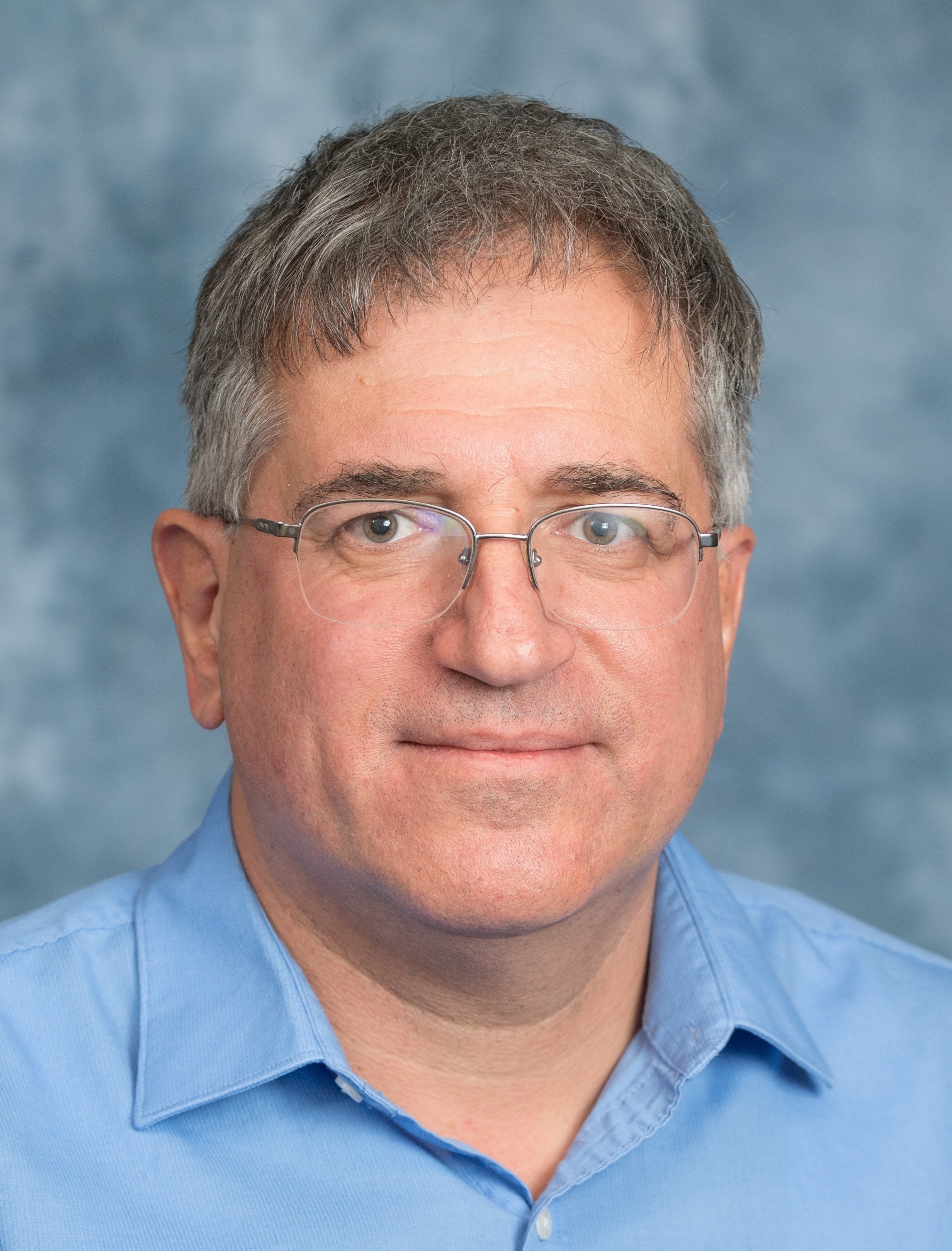
Prof.
Branislav M. Notaros
Colorade State University, Fort Collins, Colorado, USA
Paper Title
Higher Order Computational Electromagnetics: From Intellectual Curiosity to Practical Tools and Applications
Abstract
This keynote talk presents an overview of higher order computational electromagnetics (CEM), which historically was mainly an intellectual curiosity, and discusses advancements that have made it a practical tool for antennas and propagation (AP) developments and applications. Higher order CEM uses higher order current/field basis functions defined on large (e.g., on the order of a wavelength in each dimension) curvilinear geometrical elements, which greatly reduces the number of unknowns for a given problem and enhances the accuracy and efficiency of the analysis. Although it has been around for almost 60 years, there has been a gap between the academic and scientific interest in higher order CEM techniques, which evidently show great numerical potential, and their actual use in electromagnetics research and engineering applications. One way to contribute to closing this gap is to make higher order CEM methodologies, elements, and approximation functions more comprehensible and approachable, and more easily and confidently used by both CEM developers and practitioners, with as much automation and certainty as possible. To this end, this talk discusses a synergistic combination of error estimation and control, meshing, adaptive refinement, hp-methods, and uncertainty quantification for higher order CEM. We go from theoretical backgrounds and numerical implementations to practical applications of higher order CEM in AP designs and systems.
Biography
Branislav M. Notaros is a Professor of Electrical and Computer Engineering, Director of Electromagnetics Laboratory, and University Distinguished Teaching Scholar at Colorado State University. His research contributions are in computational and applied electromagnetics, antennas, and propagation. He was the recipient of the 1999 IEE Marconi Premium, 2005 IEEE MTT-S Microwave Prize, 2022 IEEE Antennas and Propagation Edward E. Altshuler Prize Paper Award, 2019 ACES Technical Achievement Award, 2014 Carnegie Foundation Colorado Professor of the Year Award, 2015 ASEE ECE Distinguished Educator Award, 2015 IEEE Undergraduate Teaching Award, and many other research and teaching awards. He is Fellow of IEEE “for contributions to higher order methods in computational electromagnetics” and Applied Computational Electromagnetics Society (ACES). Prof. Notaros serves as Immediate Past President of the IEEE Antennas and Propagation Society (AP-S) and ACES, Immediate Past Chair of the USNC-URSI Commission B, and Track Editor of the IEEE Transactions on Antennas and Propagation. He served as General Chair of the IEEE APS/URSI 2022 Denver Conference and several other conferences.

Prof.
Christophe Fumeaux
The University of Queensland, Brisbane, Australia
Paper Title
From Mode to Beams:
Simulation, Design and Implementation of Multi-Mode Antennas for Beamforming
Abstract
The growing demands of modern wireless communication technologies impose new challenges on antenna design and simulation. Antenna systems of increasing complexity, capable of delivering multiple dynamically accessible functionalities, are now essential to enhance capacity and support diverse roles in contemporary communications and sensing platforms.
This presentation focuses on the concept of multi port, multi mode antennas, in which several independent radiating modes operating within the same frequency band are generated in a shared physical volume. These uncorrelated modes, tightly packed within a compact form factor, can significantly improve the agility and capacity of communications links through pattern diversity or Multiple Input Multiple Output (MIMO) operation.
Within this framework, the talk will outline techniques for efficiently realizing multiple independent modes in a limited volume. It will then illustrate how computational tools and global optimization algorithms can be leveraged to enable advanced beamforming by exploiting a large number of co located radiating modes. This approach supports full hemisphere beam steering and nulling with high consistency and across any polarization. The presented concept offers promising new opportunities for future distributed sensing and communication systems.
This presentation focuses on the concept of multi port, multi mode antennas, in which several independent radiating modes operating within the same frequency band are generated in a shared physical volume. These uncorrelated modes, tightly packed within a compact form factor, can significantly improve the agility and capacity of communications links through pattern diversity or Multiple Input Multiple Output (MIMO) operation.
Within this framework, the talk will outline techniques for efficiently realizing multiple independent modes in a limited volume. It will then illustrate how computational tools and global optimization algorithms can be leveraged to enable advanced beamforming by exploiting a large number of co located radiating modes. This approach supports full hemisphere beam steering and nulling with high consistency and across any polarization. The presented concept offers promising new opportunities for future distributed sensing and communication systems.
Biography
Christophe Fumeaux received his Ph.D. degree from ETH Zurich, Switzerland, in 1997. From 1998 to 2008, he held various positions at the University of Central Florida, the Swiss Federal Office of Metrology, and ETH Zurich. From 2008 to 2023, he was a Professor with The University of Adelaide. In 2023, he joined the School of Electrical Engineering and Computer Science at The University of Queensland, as Chair Professor in Optical and Microwave Engineering. His main research interests concern applied electromagnetics, antenna engineering, and the application of RF design principles across the electromagnetic spectrum.
Prof. Fumeaux was the recipient of the ETH Medal for his doctoral dissertation. He was the recipient of the 2018 Edward E. Altshuler Prize, the 2014 IEEE Sensors Journal and the 2004 ACES Journal best paper awards. He was the recipient of the University of Adelaide 2018 Stephen Cole the Elder Award for Excellence in PhD Supervision. From 2017 to early 2023, he served as the Editor-in-Chief for the IEEE Antennas and Wireless Propagation Letters. He was 2025 President of the IEEE Antennas and Propagation Society and he is currently serving as IEEE AP-S Vice-President of Publications. He is a Fellow of the IEEE.
Prof. Fumeaux was the recipient of the ETH Medal for his doctoral dissertation. He was the recipient of the 2018 Edward E. Altshuler Prize, the 2014 IEEE Sensors Journal and the 2004 ACES Journal best paper awards. He was the recipient of the University of Adelaide 2018 Stephen Cole the Elder Award for Excellence in PhD Supervision. From 2017 to early 2023, he served as the Editor-in-Chief for the IEEE Antennas and Wireless Propagation Letters. He was 2025 President of the IEEE Antennas and Propagation Society and he is currently serving as IEEE AP-S Vice-President of Publications. He is a Fellow of the IEEE.
Dr.
C. J. Reddy
Altair Engineering, Troy, MI, USA
Paper Title
Pushing the Boundaries of Computational Electromagnetics – Application to Antenna Designs, Placement, Co-site Interference Simulations and Digital Twins
Abstract
Simulation-driven design changed product development forever, enabling engineers to reduce design, iterations, and prototype testing. Increasing scientific computing power expanded the opportunity to apply analysis, making large design studies possible within the timing constraints of a program. This talk will focus on advanced CEM simulation tools that incorporate numerical methods, such as Method of Moments (MoM), Multilevel Fast Multipole Method (MLFMM), Finite Element Method (FEM), Finite Difference Time Domain (FDTD), Physical Optics (PO), Ray Lunching Geometrical Optics (RL-GO), and Uniform Theory of Diffraction (UTD). As the complexity of connected devices increases each day, designers are taking advantage of AI/ML to generate trained models for their physical antenna designs and perform fast and intelligent optimization on these trained models. Using the trained models, different optimization algorithms and goals can be run quickly, in seconds, that can be utilized for comparison studies, stochastic analysis for tolerance studies etc. Use of cloud computing combined with AI/ML, many design iterations can be performed in a short period and reducing the time to market. This talk will also focus on future trends in cloud computing for physics-based simulations and the emerging topics such as Digital Twins.
Biography
C.J. Reddy is Siemens Fellow at Siemens Digital Industries Software. He served as Vice President, Business Development-Electromagnetics for Americas at Altair from 2014 to 2025 and transitioned to Siemens, with the acquisition of Altair by Siemens. Dr. Reddy was awarded the Natural Sciences and Engineering Research Council (NSERC) of Canada Visiting Fellowship to work at Communications Research Center in Ottawa during 1991-1993 and was awarded the US National Research Council (NRC) Resident Research Associateship in 1993 to work at NASA Langley Research Center in Hampton, Virginia. He also worked as Research Professor at Hampton University from 1995 to 2000. Dr. Reddy was the President of Applied EM, Inc (2000-2017) where he led several Phase I and Phase II SBIR projects for the DoD and NASA. He was also the President of EM Software & Systems (USA) Inc (2002-2014) and led the marketing of the EM Simulation tool, Feko in North America. EM Software & Systems (USA) Inc was acquired by Altair in 2014. Dr. Reddy is a Fellow of IEEE, Fellow of ACES (Applied Computational Electromagnetics Society) and a Fellow of AMTA (Antenna Measurement Techniques Association). Dr. Reddy is a co-author of the book, “Antenna Analysis and Design Using FEKO Electromagnetic Simulation Software,” published in June 2014 by SciTech Publishing (now part of IET). Dr. Reddy served as an Associate Editor for IEEE Open Journal of Antennas of Propagation and IEEE Transactions on Antennas and Propagation. He served as the Chair of IEEE Antennas and Propagation Society (APS) Young Professionals Committee during 2021-2024 and served on the AP-S AdCom during 2023-2024. Dr. Reddy is appointed to IEEE Fellows Committee by IEEE Board of Directors for the terms 2020-2021 and 2022-2023. Currently, Dr. Reddy is serving as the 2026 IEEE AP-S President. Dr. Reddy is inducted into IEEE Heritage Circle by the IEEE Foundation for establishing the "IEEE AP-S CJ Reddy Travel Grant for Graduate Students."
Prof.
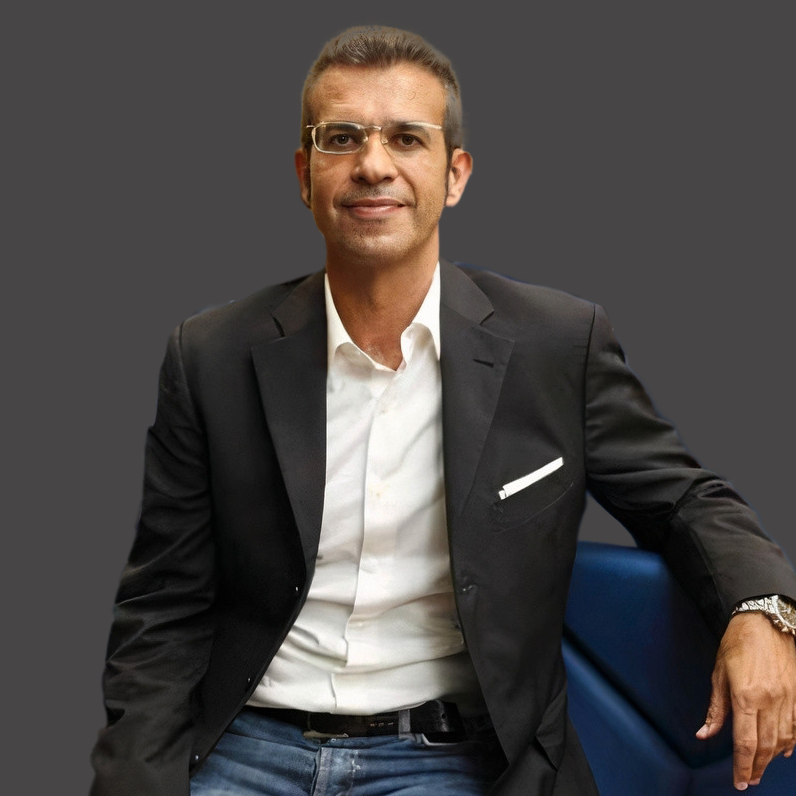
Andrea Massa
University of Trento, Trento, Italy
Paper Title
Computational Electromagnetics for Smart EM Environments
Abstract
The evolution of wireless communication systems towards 6G and beyond is driving a fundamental paradigm shift: the transition from traditional, passive wireless channels to Smart Electromagnetic Environments (SEME). Unlike conventional networks that treat the physical propagation channel as a static and uncontrollable entity, a SEME actively molds and controls electromagnetic (EM) wave propagation to drastically enhance network performance. At the core of this technological revolution is Computational Electromagnetics (CEM). However, transforming the SEME concept into a tangible reality introduces unprecedented computational and design complexities that cannot be tackled by traditional engineering approaches alone.
More specifically, the successful realization of a Smart EM Environment fundamentally relies on the synergistic integration of advanced EM predictors and robust optimizers. A dual-scale computational framework is strictly required, operating simultaneously at the microscopic level (device design) and the macroscopic level (network planning and deployment).
At the device level, the combination of accurate CEM predictors (ranging from rigorous full-wave solvers to fast AI-driven surrogate models) and powerful optimization algorithms is essential for the synthesis of key enabling technologies. Modern networks rely on highly complex, multi-scale devices, including Smart Programmable Electromagnetic Surfaces (SP-EMS), Reconfigurable Intelligent Surfaces (RIS), Smart Repeaters, Integrated Access and Backhaul (IAB) nodes, and next-generation Base Transceiver Stations (BTS). Optimizers are deployed to systematically explore vast architectural design spaces, tuning unit cells, meta-atoms, and array configurations. Concurrently, predictors evaluate the scattering and radiation properties in real-time, ensuring that the designed devices can dynamically manipulate EM waves with high fidelity, high energy efficiency, and low latency.
Beyond the synthesis of individual hardware components, the predictor-optimizer synergy is critical during the macroscopic network planning and deployment phase. Fast and accurate EM predictors—such as advanced ray-tracing models integrated with machine learning—are necessary to evaluate the propagation characteristics of complex, electrically large urban or indoor environments. When coupled with system-level optimizers, these predictive tools enable the strategic placement, orientation, and real-time configuration of RIS, IAB nodes, and BTS across the territory.
The ultimate goal of combining CEM predictors and optimizers is to solve highly complex, multi-objective engineering problems. By accurately modeling the physical environment and intelligently deploying customized network nodes, it becomes possible to strictly minimize energy consumption and deployment costs (CAPEX and OPEX). Simultaneously, this methodology allows operators to maximize overall EM coverage, signal-to-interference-plus-noise ratio (SINR), and the Quality of Service (QoS) perceived by the end-users. Ultimately, an advanced computational framework driven by the continuous loop of accurate prediction and smart optimization is the absolute cornerstone for designing sustainable, cost-effective, and high-performance Smart EM Environments.
More specifically, the successful realization of a Smart EM Environment fundamentally relies on the synergistic integration of advanced EM predictors and robust optimizers. A dual-scale computational framework is strictly required, operating simultaneously at the microscopic level (device design) and the macroscopic level (network planning and deployment).
At the device level, the combination of accurate CEM predictors (ranging from rigorous full-wave solvers to fast AI-driven surrogate models) and powerful optimization algorithms is essential for the synthesis of key enabling technologies. Modern networks rely on highly complex, multi-scale devices, including Smart Programmable Electromagnetic Surfaces (SP-EMS), Reconfigurable Intelligent Surfaces (RIS), Smart Repeaters, Integrated Access and Backhaul (IAB) nodes, and next-generation Base Transceiver Stations (BTS). Optimizers are deployed to systematically explore vast architectural design spaces, tuning unit cells, meta-atoms, and array configurations. Concurrently, predictors evaluate the scattering and radiation properties in real-time, ensuring that the designed devices can dynamically manipulate EM waves with high fidelity, high energy efficiency, and low latency.
Beyond the synthesis of individual hardware components, the predictor-optimizer synergy is critical during the macroscopic network planning and deployment phase. Fast and accurate EM predictors—such as advanced ray-tracing models integrated with machine learning—are necessary to evaluate the propagation characteristics of complex, electrically large urban or indoor environments. When coupled with system-level optimizers, these predictive tools enable the strategic placement, orientation, and real-time configuration of RIS, IAB nodes, and BTS across the territory.
The ultimate goal of combining CEM predictors and optimizers is to solve highly complex, multi-objective engineering problems. By accurately modeling the physical environment and intelligently deploying customized network nodes, it becomes possible to strictly minimize energy consumption and deployment costs (CAPEX and OPEX). Simultaneously, this methodology allows operators to maximize overall EM coverage, signal-to-interference-plus-noise ratio (SINR), and the Quality of Service (QoS) perceived by the end-users. Ultimately, an advanced computational framework driven by the continuous loop of accurate prediction and smart optimization is the absolute cornerstone for designing sustainable, cost-effective, and high-performance Smart EM Environments.
Biography
Andrea Massa (IEEE Fellow, IET Fellow, Electromagnetic Academy Fellow) has been a Full Professor of Electromagnetic Fields @ University of Trento since 2005.
At present, Prof. Massa is the director of the network of 19 federated laboratories "ELEDIA Research Center" located in Brunei, China, Czech, Ethiopia, France, Greece, Italy, Japan, Peru, USA, Tunisia with more than 150 researchers. Moreover, he is holder of a Chang-Jiang Chair Professorship @ UESTC (Chengdu – China), Visiting Research Professor @ University of Illinois at Chicago (Chicago – USA), Distinguished Visiting Professor @ Tsinghua (Beijing - China), and Visiting Professor as well as IAS Distinguished Scholar @ Tel Aviv University (Tel Aviv – Israel). He has been holder of a Senior DIGITEO Chair at L2S-CentraleSupélec and CEA LIST in Saclay (France), UC3M-Santander Chair of Excellence @ Universidad Carlos III de Madrid (Spain), , and Professor @ CentraleSupelec (Paris - France), Adjunct Professor at Penn State University (USA), Guest Professor @ UESTC (China), and Visiting Professor at the Missouri University of Science and Technology (USA), the Nagasaki University (Japan), the University of Paris Sud (France), the Kumamoto University (Japan), and the National University of Singapore (Singapore). He has been appointed IEEE AP-S Distinguished Lecturer (2016-2018) and served as Associate Editor of the "IEEE Transaction on Antennas and Propagation" (2011-2014).
His research activities are mainly concerned with inverse problems, antenna analysis/ synthesis, radar systems and signal processing, cross-layer optimization and planning of wireless/RF systems, system-by-design and material-by-design (metamaterials and reconfigurable-materials), and theory/applications of optimization techniques to engineering problems (coms, medicine, and biology).
Prof. Massa published more than 1000 scientific publications among which more than 400 on international journals (>19.500 citations – h-index = 71 [Scopus]; > 15.000 citations – h-index = 65 [ISI-WoS]; > 31.000 citations – h-index = 97 [Google Scholar]) and more than 600 in international conferences where he presented more than 255 invited contributions (> 70 invited keynote speaker) (www.eledia.org/publications). He has organized more than 90 scientific sessions in international conferences and has participated to several technological projects in the national and international framework with both national agencies and companies (22 international prj, > 5 M€; 21 national prj, > 5 M€; 10 local prj, > 2 M€; 67 industrial prj, > 10 M€; 6 university prj, > 300 K€).
At present, Prof. Massa is the director of the network of 19 federated laboratories "ELEDIA Research Center" located in Brunei, China, Czech, Ethiopia, France, Greece, Italy, Japan, Peru, USA, Tunisia with more than 150 researchers. Moreover, he is holder of a Chang-Jiang Chair Professorship @ UESTC (Chengdu – China), Visiting Research Professor @ University of Illinois at Chicago (Chicago – USA), Distinguished Visiting Professor @ Tsinghua (Beijing - China), and Visiting Professor as well as IAS Distinguished Scholar @ Tel Aviv University (Tel Aviv – Israel). He has been holder of a Senior DIGITEO Chair at L2S-CentraleSupélec and CEA LIST in Saclay (France), UC3M-Santander Chair of Excellence @ Universidad Carlos III de Madrid (Spain), , and Professor @ CentraleSupelec (Paris - France), Adjunct Professor at Penn State University (USA), Guest Professor @ UESTC (China), and Visiting Professor at the Missouri University of Science and Technology (USA), the Nagasaki University (Japan), the University of Paris Sud (France), the Kumamoto University (Japan), and the National University of Singapore (Singapore). He has been appointed IEEE AP-S Distinguished Lecturer (2016-2018) and served as Associate Editor of the "IEEE Transaction on Antennas and Propagation" (2011-2014).
His research activities are mainly concerned with inverse problems, antenna analysis/ synthesis, radar systems and signal processing, cross-layer optimization and planning of wireless/RF systems, system-by-design and material-by-design (metamaterials and reconfigurable-materials), and theory/applications of optimization techniques to engineering problems (coms, medicine, and biology).
Prof. Massa published more than 1000 scientific publications among which more than 400 on international journals (>19.500 citations – h-index = 71 [Scopus]; > 15.000 citations – h-index = 65 [ISI-WoS]; > 31.000 citations – h-index = 97 [Google Scholar]) and more than 600 in international conferences where he presented more than 255 invited contributions (> 70 invited keynote speaker) (www.eledia.org/publications). He has organized more than 90 scientific sessions in international conferences and has participated to several technological projects in the national and international framework with both national agencies and companies (22 international prj, > 5 M€; 21 national prj, > 5 M€; 10 local prj, > 2 M€; 67 industrial prj, > 10 M€; 6 university prj, > 300 K€).

Prof.
Francesco Andriulli
Politecnico di Torino, Turin, Italy
Paper Title
Complexity Breaking Complexities in Computational Electromagnetics: Best Practices for Leading through Difficult (Computational) Times
Abstract
Computational Electromagnetics (CEM) is a scientific discipline positioned at the intersection of electrical engineering, high-performance computing, and applied mathematics. It is primarily concerned with the modeling and simulation of complex electromagnetic phenomena that arise in advanced technological and scientific contexts. Historically, CEM has provided the predictive framework underlying a wide spectrum of applications in electrical and electronic engineering, optics, wireless communications, geophysical exploration, and biomedical systems.
In recent years, the scope of CEM has broadened significantly, engaging with an expanding range of interdisciplinary fields, including information retrieval, computational neuroscience, machine learning, and brain-computer interfaces. A pervasive trend across these domains is the substantial growth in the dimensionality and scale of the problems to be addressed, driven by system miniaturization and increased component density. This evolution has led to escalating levels of computational complexity and, consequently, increased cost and effort associated with electromagnetic modeling, design, and simulation.
This talk will provide a comprehensive overview of the major challenges both longstanding and emerging, facing the field of CEM, with examples spanning from canonical problems to those of "Holy Grail"-like complexity. Emphasis will be placed on recent research efforts aimed at achieving paradigm shifts in simulation methodologies, with the objective of overcoming the computational bottlenecks inherent in conventional approaches and enabling significant performance gains. Applications discussed will include brain imaging and modeling, electromagnetic dosimetry, epilepsy diagnosis, and the development of brain-computer interfaces.
In recent years, the scope of CEM has broadened significantly, engaging with an expanding range of interdisciplinary fields, including information retrieval, computational neuroscience, machine learning, and brain-computer interfaces. A pervasive trend across these domains is the substantial growth in the dimensionality and scale of the problems to be addressed, driven by system miniaturization and increased component density. This evolution has led to escalating levels of computational complexity and, consequently, increased cost and effort associated with electromagnetic modeling, design, and simulation.
This talk will provide a comprehensive overview of the major challenges both longstanding and emerging, facing the field of CEM, with examples spanning from canonical problems to those of "Holy Grail"-like complexity. Emphasis will be placed on recent research efforts aimed at achieving paradigm shifts in simulation methodologies, with the objective of overcoming the computational bottlenecks inherent in conventional approaches and enabling significant performance gains. Applications discussed will include brain imaging and modeling, electromagnetic dosimetry, epilepsy diagnosis, and the development of brain-computer interfaces.
Biography
Francesco P. Andriulli received the Laurea in electrical engineering from the Politecnico di Torino, Italy, in 2004, the MSc in electrical engineering and computer science from the University of Illinois at Chicago in 2004, and the PhD in electrical engineering from the University of Michigan at Ann Arbor in 2008. From 2008 to 2010 he was a Research Associate with the Politecnico di Torino. From 2010 to 2017 he was an Associate Professor (2010-2014) and then Full Professor with the École Nationale Supérieure Mines-Télécom Atlantique (IMT Atlantique), Brest, France. Since 2017 he has been a Full Professor with the Politecnico di Torino, Turin, Italy. His research interests are in computational electromagnetics including frequency- and time-domain integral equation solvers, well-conditioned formulations, fast solvers, low-frequency electromagnetic analyses, and modeling techniques for antennas, wireless components, microwave circuits, and biomedical applications with a special focus on brain imaging.
Prof. Andriulli received several best paper awards at conferences and symposia (URSI NA 2007, IEEE AP-S 2008, ICEAA IEEE-APWC 2015) also in co-authorship with his students and collaborators (EMTS 2025, ICEAA IEEE-APWC 2021, EMTS 2016, URSI-DE Meeting 2014, ICEAA 2009) with whom received also a second prize conference paper (URSI GASS 2014), a third prize conference paper (IEEE–APS 2018), seven honorable mention conference papers (ICEAA 2011, URSI/IEEE–APS 2013, 4 in URSI/IEEE–APS 2022, URSI/IEEE–APS 2023) and other three finalist conference papers (URSI/IEEE-APS 2012, URSI/IEEE-APS 2007, URSI/IEEE-APS 2006, URSI/IEEE–APS 2022)). Moreover, he received the 2014 IEEE AP-S Donald G. Dudley Jr. Undergraduate Teaching Award, the triennium 2014-2016 URSI Issac Koga Gold Medal, and the 2015 L. B. Felsen Award for Excellence in Electrodynamics.
Prof. Andriulli is a Fellow of the IEEE and of the International Union of Radio Science (URSI), and a member of Eta Kappa Nu, Tau Beta Pi, and Phi Kappa Phi. He serves as the 2026 President-Elect of the IEEE Antennas and Propagation Society and served as IEEE AP-S Vice-President of Publications 2025, as Editor-in-Chief of the IEEE Antennas and Propagation Magazine, Track Editor for the IEEE Transactions on Antennas and Propagation and as an Associate Editor for the IEEE Antennas and Wireless Propagation Letters, IEEE Access, URSI Radio Science Letters, and IET-MAP.
Prof. Andriulli received several best paper awards at conferences and symposia (URSI NA 2007, IEEE AP-S 2008, ICEAA IEEE-APWC 2015) also in co-authorship with his students and collaborators (EMTS 2025, ICEAA IEEE-APWC 2021, EMTS 2016, URSI-DE Meeting 2014, ICEAA 2009) with whom received also a second prize conference paper (URSI GASS 2014), a third prize conference paper (IEEE–APS 2018), seven honorable mention conference papers (ICEAA 2011, URSI/IEEE–APS 2013, 4 in URSI/IEEE–APS 2022, URSI/IEEE–APS 2023) and other three finalist conference papers (URSI/IEEE-APS 2012, URSI/IEEE-APS 2007, URSI/IEEE-APS 2006, URSI/IEEE–APS 2022)). Moreover, he received the 2014 IEEE AP-S Donald G. Dudley Jr. Undergraduate Teaching Award, the triennium 2014-2016 URSI Issac Koga Gold Medal, and the 2015 L. B. Felsen Award for Excellence in Electrodynamics.
Prof. Andriulli is a Fellow of the IEEE and of the International Union of Radio Science (URSI), and a member of Eta Kappa Nu, Tau Beta Pi, and Phi Kappa Phi. He serves as the 2026 President-Elect of the IEEE Antennas and Propagation Society and served as IEEE AP-S Vice-President of Publications 2025, as Editor-in-Chief of the IEEE Antennas and Propagation Magazine, Track Editor for the IEEE Transactions on Antennas and Propagation and as an Associate Editor for the IEEE Antennas and Wireless Propagation Letters, IEEE Access, URSI Radio Science Letters, and IET-MAP.
Prof.
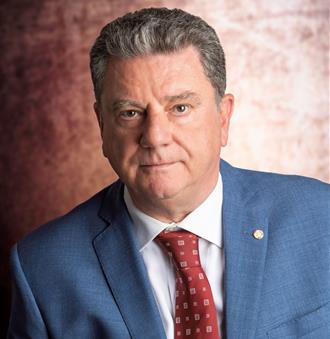
Roberto Graglia
Politecnico di Torino, Torino, Italy
Paper Title
Toward Seamless Refinement: Unifying Hybrid Elements and
High‑Order Singular Bases for 3D p/h‑Conformity
Abstract
Multiscale and multiphysics numerical solvers for the analysis of complex three‑dimensional (3D) structures must be able to handle hybrid meshes consisting of tetrahedra, hexahedra, prisms, and quadrilateral‑based pyramids, even in the presence of curved geometries. Such meshes are widely adopted because they exploit the specific advantages of each element type.
In structured or mildly curved regions, hexahedra and prisms typically offer higher accuracy and better computational efficiency, whereas tetrahedra naturally accommodate highly complex geometries. Prisms are also particularly effective in boundary‑layer discretizations, where anisotropic refinement is required.
Pyramids, on the other hand, play a crucial role as transition elements: they are the only elements capable of consistently bridging mesh regions with triangular faces to those with quadrilateral faces. This transition cannot be achieved using prisms alone, which map triangles to triangles and quadrilaterals to quadrilaterals, keeping quadrilateral faces aligned with the extrusion direction and triangular faces transverse to it.
Over the past thirty years, together with several collaborators, we have developed interpolatory vector bases and high‑order hierarchical vector bases for all major two‑ and three‑dimensional element types, including—more recently—complete high-order bases for pyramidal elements. The inclusion of pyramidal bases has enabled unrestricted and conforming h‑refinement across hybrid meshes.
For surface elements, we have also introduced singular additive bases specifically designed to capture field singularities at edges and corners with high fidelity.
This presentation will review the main results obtained so far and outline several promising directions for future developments in applied electromagnetics.
In structured or mildly curved regions, hexahedra and prisms typically offer higher accuracy and better computational efficiency, whereas tetrahedra naturally accommodate highly complex geometries. Prisms are also particularly effective in boundary‑layer discretizations, where anisotropic refinement is required.
Pyramids, on the other hand, play a crucial role as transition elements: they are the only elements capable of consistently bridging mesh regions with triangular faces to those with quadrilateral faces. This transition cannot be achieved using prisms alone, which map triangles to triangles and quadrilaterals to quadrilaterals, keeping quadrilateral faces aligned with the extrusion direction and triangular faces transverse to it.
Over the past thirty years, together with several collaborators, we have developed interpolatory vector bases and high‑order hierarchical vector bases for all major two‑ and three‑dimensional element types, including—more recently—complete high-order bases for pyramidal elements. The inclusion of pyramidal bases has enabled unrestricted and conforming h‑refinement across hybrid meshes.
For surface elements, we have also introduced singular additive bases specifically designed to capture field singularities at edges and corners with high fidelity.
This presentation will review the main results obtained so far and outline several promising directions for future developments in applied electromagnetics.
Biography
Roberto D. Graglia received the Laurea degree (summa cum laude) in Electronic Engineering from the Politecnico di Torino, Italy, in 1979, and the Ph.D. degree in Electrical Engineering and Computer Science from the University of Illinois Chicago (UIC), USA, in 1983. From 1980 to 1981, he was a Research Engineer at CSELT (now Telecom Italia Lab S.p.A.) in Torino, and from 1981 to 1983 he served as a Teaching and Research Assistant at UIC. He was a Lecturer at the Politecnico di Torino from 1984 to 1991 and a Researcher with the Italian National Research Council (CNR) from 1985 to 1992, where he led several international projects. He was also an Associate Visiting Professor at UIC in 1991 and 1993.
In 1992, Prof. Graglia joined the Department of Electronics and Telecommunications at the Politecnico di Torino as an Associate Professor and has been a Full Professor of Electrical Engineering since 1999.
Prof. Graglia has authored more than 220 publications in international journals and conference proceedings. He has been a member of the Editorial Board of Electromagnetics (Taylor & Francis) since 1997 and was one of three Guest Editors of the first ever Special Issue of the IEEE Transactions on Antennas and Propagation dedicated to Advanced Numerical Techniques in Electromagnetics (March 1997). He has served as Associate Editor for several leading IEEE journals, including the IEEE Transactions on Antennas and Propagation, IEEE Transactions on Electromagnetic Compatibility, and IEEE Antennas and Wireless Propagation Letters. He has also served the International Union of Radio Science (URSI) for its triennial International Symposia on Electromagnetic Theory.
Since 1999, Prof. Graglia has been the General Chairperson of the International Conference on Electromagnetics in Advanced Applications (ICEAA), and since 2011 he has also served as General Chairperson of the IEEE APS Topical Conference on Antennas and Propagation in Wireless Communications (IEEE APWC). He was the 2015 President of the IEEE Antennas and Propagation Society (AP S), completing nine years on the IEEE AP S Administrative Committee. During his presidency, he initiated the IEEE Journal on Multiscale and Multiphysics Computational Techniques.
Prof. Graglia has been an IEEE AP S Distinguished Lecturer since 2009 and a Life Fellow of the IEEE since 1998. He is the recipient of the 2021 Harrington Mittra Award in Computational Electromagnetics and the 2025 IEEE AP S Distinguished Achievement Award. He is also a resident elected member of the Accademia delle Scienze di Torino, founded by Giuseppe Luigi Lagrange in 1783.
In 1992, Prof. Graglia joined the Department of Electronics and Telecommunications at the Politecnico di Torino as an Associate Professor and has been a Full Professor of Electrical Engineering since 1999.
Prof. Graglia has authored more than 220 publications in international journals and conference proceedings. He has been a member of the Editorial Board of Electromagnetics (Taylor & Francis) since 1997 and was one of three Guest Editors of the first ever Special Issue of the IEEE Transactions on Antennas and Propagation dedicated to Advanced Numerical Techniques in Electromagnetics (March 1997). He has served as Associate Editor for several leading IEEE journals, including the IEEE Transactions on Antennas and Propagation, IEEE Transactions on Electromagnetic Compatibility, and IEEE Antennas and Wireless Propagation Letters. He has also served the International Union of Radio Science (URSI) for its triennial International Symposia on Electromagnetic Theory.
Since 1999, Prof. Graglia has been the General Chairperson of the International Conference on Electromagnetics in Advanced Applications (ICEAA), and since 2011 he has also served as General Chairperson of the IEEE APS Topical Conference on Antennas and Propagation in Wireless Communications (IEEE APWC). He was the 2015 President of the IEEE Antennas and Propagation Society (AP S), completing nine years on the IEEE AP S Administrative Committee. During his presidency, he initiated the IEEE Journal on Multiscale and Multiphysics Computational Techniques.
Prof. Graglia has been an IEEE AP S Distinguished Lecturer since 2009 and a Life Fellow of the IEEE since 1998. He is the recipient of the 2021 Harrington Mittra Award in Computational Electromagnetics and the 2025 IEEE AP S Distinguished Achievement Award. He is also a resident elected member of the Accademia delle Scienze di Torino, founded by Giuseppe Luigi Lagrange in 1783.
Prof.
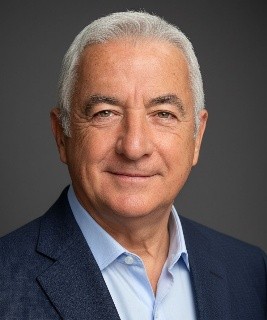
Levent Sevgi
Istanbul Technical University, Türkiye
Paper Title
From Engineering Electromagnetics to Electromagnetic Engineering: Teaching/Training Next Generations
Abstract
The role of Electromagnetic (EM) fields in our lives has been increasing. Communication, remote sensing, integrated command/ control/surveillance systems, intelligent transportation systems, medicine, environment, education, marketing, and defense are only a few areas where EM fields have critical importance. We have witnessed the transformation from Engineering Electromagnetics to Electromagnetic Engineering for the last few decades after being surrounded by EM waves everywhere. Among many others, EM engineering deals with broad range of problems from antenna design to EM scattering, indoor–outdoor radiowave propagation to wireless communication, radar systems to integrated surveillance, subsurface imaging to novel materials, EM compatibility to nano-systems, electroacoustic devices to electro-optical systems, etc. The range of the devices we use in our daily life has extended from DC up to Terahertz frequencies. We have had both large-scale (kilometers-wide) and small-scale (nanometers) EM systems. A large portion of these systems are broadband and digital and must operate in close proximity that results in severe EM interference problems. Engineers must take EM issues into account from the earliest possible design stages. This necessitates establishing an intelligent balance between strong mathematical background (theory), engineering experience (practice), and modeling and numerical computations (simulation).
This Distinguished/keynote lecture aims at a broad-brush look at current complex EM problems as well as certain teaching / training challenges that confront wave-oriented EM engineering in the 21st century, in a complex computer and technology-driven world with rapidly shifting societal and technical priorities.
This Distinguished/keynote lecture aims at a broad-brush look at current complex EM problems as well as certain teaching / training challenges that confront wave-oriented EM engineering in the 21st century, in a complex computer and technology-driven world with rapidly shifting societal and technical priorities.
Biography
Prof. Dr. Levent Sevgi is a Fellow of the IEEE (since 2009) and the recipient of IEEE APS Chen-To Tai Distinguished Educator Award (2021). He was with Istanbul Technical University (1991–1998), TUBITAK-MRC, Information Technologies Research Institute (1999–2000), Weber Research Institute / NY Polytechnic University (1988–1990), Scientific Research Group of Raytheon Systems Canada (1998 – 1999), Center for Defense Studies, ITUV-SAM (1993 –1998 and 2000–2002) and with University of Massachusetts, Lowell (UML) MA/USA as a full-time faculty (2012 – 2013), DOGUS University (2001-2014), Istanbul OKAN (2014 - 2021), and ATLAS (2022-2024) Universities.
He served four years (2020-2023) as an IEEE AP-S Distinguished Lecturer. Since Jan 2024 he has been the chair of the IEEE AP-S DL Committee. He served one-term in the IEEE AP-S AdCom (2013-2015) and one-term and as a member of IEEE AP-S Field Award Committee (2018-2019). He had been the writer/editor of the “Testing ourselves” Column in the IEEE AP Magazine (2007-2021), a member of the IEEE AP-S Education Committee (2006-2021), He also served in several editorial boards (EB) of other prestigious journals / magazines, such as the IEEE AP Magazine (2007-2021), Wiley’s International Journal of RFMiCAE (2002-2018), and the IEEE Access (2017-2019 and 2020 - 2022). He is the founding chair of the EMC TURKIYE International Conferences (www.emcturkiye.org).
He has been involved with complex electromagnetic problems for nearly four decades. His research study has focused on electromagnetic radiation, propagation, scattering and diffraction; RCS prediction and reduction; EMC/EMI modelling, simulation, tests and measurements; multi-sensor integrated wide area surveillance systems; surface wave HF radars; analytical and numerical methods in electromagnetics; FDTD, TLM, FEM, SSPE, and MoM techniques and their applications; bio-electromagnetics. He is also interested in novel approaches in engineering education, teaching electromagnetics via virtual tools. He also teaches popular science lectures such as Science, Technology and Society.
He has published many books / book chapters in English and Turkish, over 180 journal/magazine papers / tutorials and attended more than 100 international conferences / symposiums. His three books Complex Electromagnetic Problems and Numerical Simulation Approaches, Electromagnetic Modeling and Simulation and Radiowave Propagation and Parabolic Equation Modeling were published by the IEEE Press - WILEY in 2003, 2014, and 2017, respectively. His fourth and fifth books, A Practical Guide to EMC Engineering (Sep 2017) and Diffraction Modeling and Simulation with MATLAB (Feb 2021) were published by ARTECH HOUSE.
His h-index is 39, with a record of 5300+ citations (source: Google Scholar, Nov 2025).
He served four years (2020-2023) as an IEEE AP-S Distinguished Lecturer. Since Jan 2024 he has been the chair of the IEEE AP-S DL Committee. He served one-term in the IEEE AP-S AdCom (2013-2015) and one-term and as a member of IEEE AP-S Field Award Committee (2018-2019). He had been the writer/editor of the “Testing ourselves” Column in the IEEE AP Magazine (2007-2021), a member of the IEEE AP-S Education Committee (2006-2021), He also served in several editorial boards (EB) of other prestigious journals / magazines, such as the IEEE AP Magazine (2007-2021), Wiley’s International Journal of RFMiCAE (2002-2018), and the IEEE Access (2017-2019 and 2020 - 2022). He is the founding chair of the EMC TURKIYE International Conferences (www.emcturkiye.org).
He has been involved with complex electromagnetic problems for nearly four decades. His research study has focused on electromagnetic radiation, propagation, scattering and diffraction; RCS prediction and reduction; EMC/EMI modelling, simulation, tests and measurements; multi-sensor integrated wide area surveillance systems; surface wave HF radars; analytical and numerical methods in electromagnetics; FDTD, TLM, FEM, SSPE, and MoM techniques and their applications; bio-electromagnetics. He is also interested in novel approaches in engineering education, teaching electromagnetics via virtual tools. He also teaches popular science lectures such as Science, Technology and Society.
He has published many books / book chapters in English and Turkish, over 180 journal/magazine papers / tutorials and attended more than 100 international conferences / symposiums. His three books Complex Electromagnetic Problems and Numerical Simulation Approaches, Electromagnetic Modeling and Simulation and Radiowave Propagation and Parabolic Equation Modeling were published by the IEEE Press - WILEY in 2003, 2014, and 2017, respectively. His fourth and fifth books, A Practical Guide to EMC Engineering (Sep 2017) and Diffraction Modeling and Simulation with MATLAB (Feb 2021) were published by ARTECH HOUSE.
His h-index is 39, with a record of 5300+ citations (source: Google Scholar, Nov 2025).